
The Scale of Change
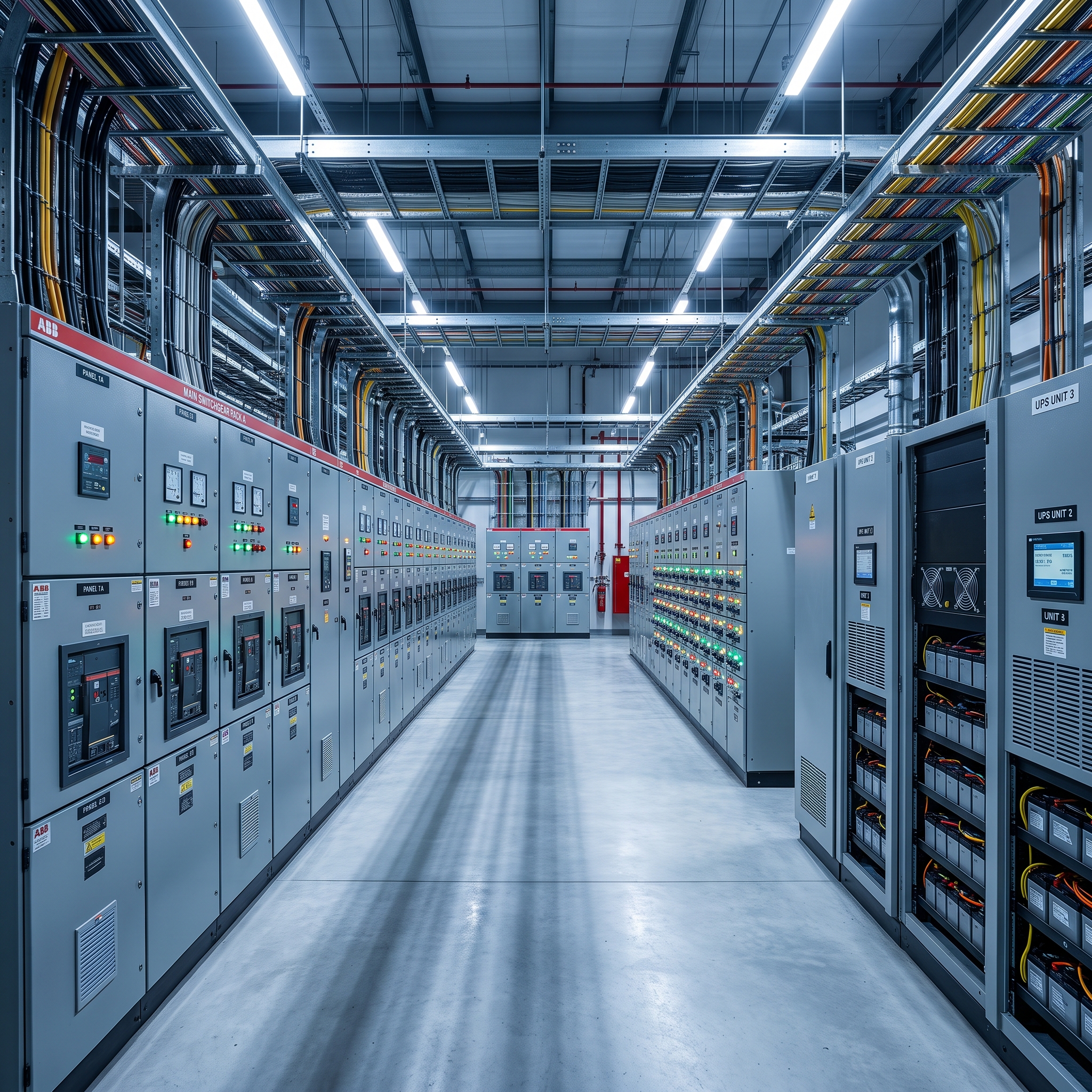
Over the next few years, the world is investing between $650 billion and $900 billion in new hyperscale data centre capacity. These are not small facilities. They are massive computing complexes built to train and run artificial intelligence models, process vast datasets, and deliver cloud services at scale.
This investment is reshaping how power infrastructure works. It's not just about consuming more electricity - though these facilities certainly do that. It's fundamentally changing the relationship between energy supply, demand, and stability across entire regions.
For most Waikato business owners, this shift feels distant. It isn't. The same technologies and approaches being deployed at hyperscale are trickling down into commercial and industrial projects much closer to home.
Why Power Infrastructure Matters Now
Data centres are power-hungry. A single hyperscale facility can consume as much electricity as a small city. That demand has forced a rethink about how power is delivered, managed, and stabilised.
Traditionally, businesses installed backup power systems - uninterruptible power supplies (UPS) and generators - to protect against outages. These still matter. But the scale of modern data centres has created a different problem: how do you maintain stable, reliable power when demand is this large and this variable?
The answer is redundancy and integration. Modern data centres use:
- Multiple independent power feeds from the grid
- High-capacity UPS systems with battery or fuel cell backup
- On-site generation capacity (often natural gas or renewable-based)
- Smart power management systems that balance load across these sources
- Real-time monitoring and automated failover
What's interesting, and what changes the picture for smaller businesses, is that these same facilities are now being designed to stabilise local power grids, not just draw from them. When demand on the grid peaks, a well-designed data centre can actually feed power back, or reduce its own consumption strategically, to ease strain.
The Shift to Continuous Baseload Power
Renewable energy, solar and wind, has transformed power generation. But it's intermittent. The sun doesn't always shine. The wind doesn't always blow. For data centres running 24/7, that variability is a problem.
Industrial manufacturers like Schneider Electric and FuelCell Energy are responding with next generation continuous baseload solutions. Scalable fuel cells are one example: they can run continuously, scale up or down based on demand, and integrate with existing power infrastructure.
These aren't theoretical. They're being deployed now in new data centre projects, and they're becoming more affordable as manufacturing scales up.
For a Waikato business, this matters because it signals a direction: power infrastructure is moving toward distributed, resilient, and integrated systems. That's true whether you're running a hyperscale facility or a commercial office with critical operations.
What This Means for Your Business
Your Power Needs Are Likely Growing
If your business runs servers, cloud-connected systems, or data-intensive operations, your power demand is probably increasing year on year. That trend will continue. Planning for that growth now, rather than scrambling when you hit capacity, saves money and headaches.
Redundancy Is No Longer Optional
Even small businesses now rely on continuous connectivity and data availability. A power outage that costs a hyperscale data centre millions per minute also costs you real money in lost productivity, damaged reputation, and data risk.
Redundant power infrastructure, multiple feeds, backup generation, or UPS systems, is becoming a baseline expectation, not a luxury. The question isn't whether you need it; it's what form makes sense for your operation and budget.
Integration and Monitoring Change the Game
It's not enough to have backup power. You need to know, in real time, that it's working. Modern power management systems give you visibility into consumption, load distribution, and system health. They can also automate responses to problems, switching to backup power, shedding non-critical loads, or alerting your team - before you even notice an issue.
For businesses with server rooms, network infrastructure, or manufacturing equipment, that visibility and automation directly protects your bottom line.
Where Alexis IT Comes In
The infrastructure changes being driven by hyperscale data centres create real opportunities for Waikato businesses to strengthen their own operations.
Alexis IT works with business owners and operations managers to assess power infrastructure and build resilience into their systems. That includes:
- Electrical design and installation: Planning power distribution, load management, and backup systems that match your actual needs and growth trajectory
- Data cabling and network infrastructure: Ensuring your systems are physically connected in ways that support redundancy and failover
- UPS and backup power: Selecting, installing, and maintaining systems that keep your critical operations running during outages
- Monitoring and management: Setting up systems that give you real-time visibility into power health and performance
- Integration: Connecting electrical, cabling, and IT infrastructure so they work together rather than in silos
We don't sell you systems you don't need. We help you understand what your business actually depends on, what could hurt you if it failed, and what investment makes sense.
Getting Started
If your business runs critical systems, servers, network equipment, manufacturing machinery, or data processing, a conversation about power infrastructure is worth having.
Start by asking yourself: What happens if the power goes out for an hour? For a day? What systems must stay running, and what's the cost if they don't?
Those answers guide everything else: what kind of redundancy you need, what backup systems make sense, and what monitoring and management tools are worth the investment.
The trends reshaping power infrastructure at hyperscale are real, and they're trickling down. The businesses that plan for them now will be better positioned than those that scramble later.
If you'd like to talk through your power infrastructure and resilience needs, get in touch with Alexis IT. We'll help you understand what matters for your operation and what options make sense.